Frequently Asked Questions
Features & Capabilities
Why is graph storage better for security data than relational databases?
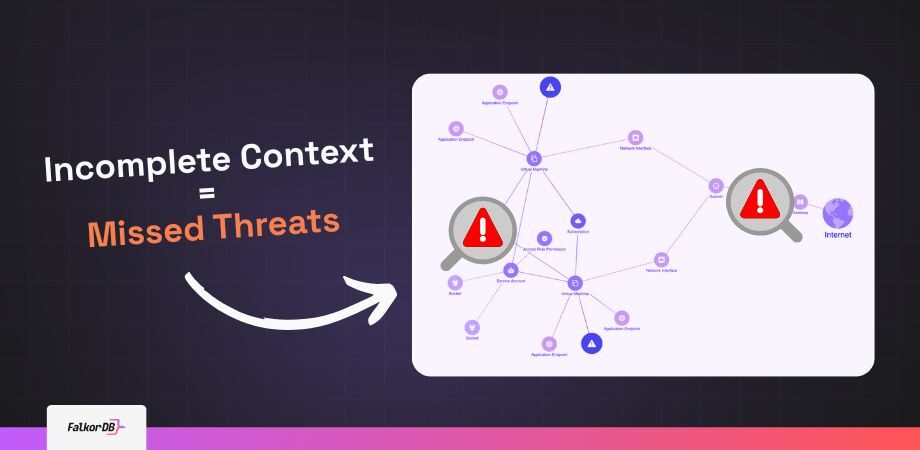
Graph storage natively represents the interconnected nature of security data, such as users, configurations, findings, services, roles, assets, and events. This allows you to ask complex questions like, "What's the path from this leaked token to a production database?" without the performance penalties of relational JOINs. The result is shorter time to detect lateral movement, better root-cause analysis, and no context gaps between domains. (Source: FalkorDB Blog)
How does FalkorDB handle schema changes in security datasets?
FalkorDB's flexible data model allows you to introduce new data types and update metadata without downtime or rework. This means you avoid migration-induced slowdowns and can stay responsive to changes in your attack surface. (Source: FalkorDB Blog)
What performance advantages does FalkorDB offer for security analytics?
FalkorDB delivers up to 496x faster latency compared to competitors like Neo4j, with consistent low-latency performance under load for aggregate traversal queries common in security analytics. For example, P50 latency is 36ms (FalkorDB) vs. 469ms (competition), and P99 is 83ms vs. 41,157ms. (Source: Official Benchmarks)
How does FalkorDB optimize memory usage and reduce costs?
FalkorDB's unique sparse matrix core uses fewer resources to represent and traverse graphs, resulting in 6x better memory efficiency compared to competitors. For example, FalkorDB uses 100MB of memory versus 600MB for competitors, lowering your cloud spend. (Source: FalkorDB Blog)
Does FalkorDB support multi-tenancy for security platforms?
Yes, FalkorDB can manage 10,000+ isolated graph tenants per database, each with a private namespace and query surface. This ensures zero tenant data commingling and minimal DevOps overhead, making it ideal for SaaS security platforms. (Source: FalkorDB Blog)
How does FalkorDB help with alert fatigue and threat prioritization?
FalkorDB enables end-to-end context resolution, allowing you to correlate IAM misconfigurations with workload vulnerabilities and data exposure paths. This helps you fix the most important incidents first, reduces false positives, and improves threat model fidelity. (Source: FalkorDB Blog)
What is the maximum query throughput FalkorDB can achieve?
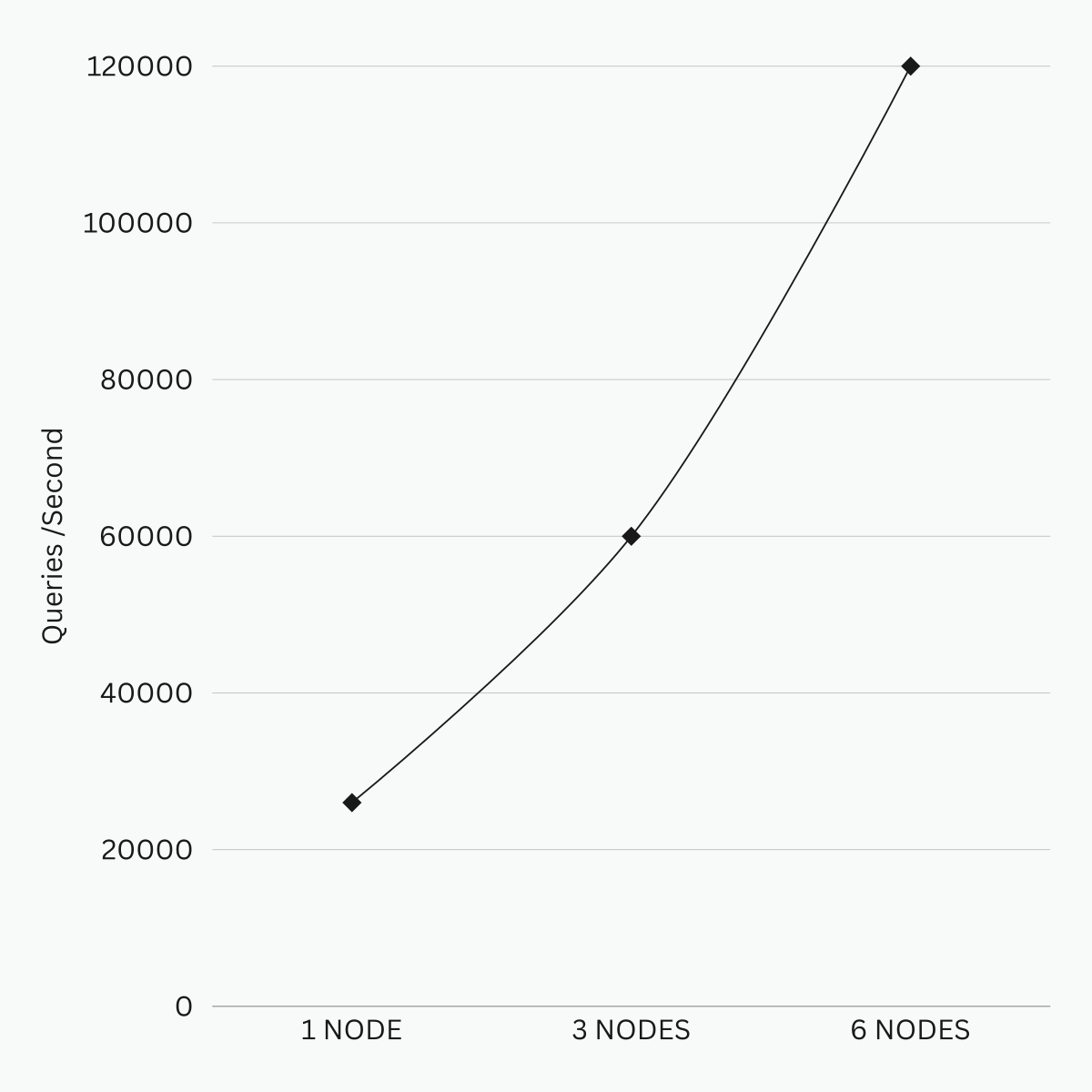
Clustered FalkorDB scales from 20,000 QPS (1 node) to 120,000 QPS (6 nodes) while spreading multi-graph workloads across multiple nodes, supporting high-throughput security analytics. (Source: FalkorDB Blog)
How does FalkorDB support real-time threat modeling and attack path analysis?
FalkorDB is engineered for real-time threat modeling, attack path analysis, and multi-tenant security workloads. It delivers sub-millisecond query performance across billions of edges, making it suitable for interactive security applications. (Source: FalkorDB Blog)
How does FalkorDB handle multi-hop security queries?
FalkorDB represents graphs using sparse matrices and performs efficient graph traversals using linear algebra operations. This enables consistent millisecond query times for multi-hop security queries, supporting real-time detection and investigation. (Source: FalkorDB Blog)
What integrations does FalkorDB offer for security and AI workflows?
FalkorDB integrates with frameworks such as Graphiti (by ZEP) for AI agent memory, g.v() for knowledge graph visualization, Cognee for mapping knowledge graphs, LangChain and LlamaIndex for LLM integration, and more. (Source: FalkorDB Integrations)
Does FalkorDB provide an API and technical documentation?
Yes, FalkorDB provides a comprehensive API and technical documentation, including guides for setup, advanced configurations, and integration. Access the documentation at docs.falkordb.com. (Source: FalkorDB Docs)
What is the primary purpose of FalkorDB?
FalkorDB is a high-performance graph database designed to manage complex relationships and enable advanced AI applications, especially for security, fraud detection, and agentic AI use cases. (Source: FalkorDB Website)
What are the key capabilities of FalkorDB?
Key capabilities include support for 10,000+ multi-graphs (tenants), open-source licensing, linear scalability, ultra-low latency, GraphRAG and agent memory optimization, and flexible cloud/on-prem deployment. (Source: FalkorDB Website)
How does FalkorDB support regulatory compliance in security applications?
FalkorDB's GraphRAG-SDK helps organizations stay ahead of financial regulations by mapping regulations to workflows, identifying compliance gaps, and providing actionable recommendations. (Source: FalkorDB Website)
What security and compliance certifications does FalkorDB have?
FalkorDB is SOC 2 Type II compliant, ensuring rigorous standards for security, availability, processing integrity, confidentiality, and privacy. (Source: FalkorDB Demo Page)
How does FalkorDB ensure tenant data isolation?
FalkorDB provides each tenant with a private namespace and query surface, ensuring zero data commingling and robust isolation for multi-tenant security platforms. (Source: FalkorDB Blog)
How does FalkorDB compare to Neo4j for security workloads?
FalkorDB offers up to 496x faster latency and 6x better memory efficiency than Neo4j, includes multi-tenancy in all plans, and supports flexible horizontal scaling. (Source: FalkorDB vs. Neo4j)
How does FalkorDB compare to AWS Neptune for security analytics?
FalkorDB is open source, supports multi-tenancy, and delivers better latency performance than AWS Neptune, which is proprietary and lacks multi-tenancy support. (Source: FalkorDB vs. AWS Neptune)
How does FalkorDB compare to TigerGraph and ArangoDB?
FalkorDB provides faster latency, more efficient memory usage, and flexible horizontal scaling compared to TigerGraph and ArangoDB, making it a strong choice for performance-critical security applications. (Source: FalkorDB Website)
What pain points does FalkorDB address for security teams?
FalkorDB addresses trust and reliability in LLM-based applications, scalability and data management, alert fatigue, performance limitations of competitors, interactive data analysis, regulatory compliance, and agentic AI/chatbot development. (Source: FalkorDB Website)
Who can benefit from using FalkorDB for security data?
Developers, data scientists, engineers, and security analysts at enterprises, SaaS providers, and organizations managing complex, interconnected security data in real-time or interactive environments can benefit from FalkorDB. (Source: FalkorDB Demo Page)
What is the business impact of using FalkorDB for security analytics?
Customers can expect improved scalability, enhanced trust and reliability, reduced alert fatigue, faster time-to-market, enhanced user experience, regulatory compliance, and support for advanced AI applications. (Source: FalkorDB Website)
Can you share customer success stories using FalkorDB for security data?
Yes. For example, AdaptX uses FalkorDB to analyze high-dimensional medical and clinical patient data, XR.Voyage overcame scalability challenges in immersive platforms, and Virtuous AI created a high-performance, multi-modal data store for ethical AI development. (Source: FalkorDB Case Studies)
What industries use FalkorDB for security and analytics?
Industries include healthcare (AdaptX), media and entertainment (XR.Voyage), and artificial intelligence/ethical AI development (Virtuous AI). (Source: FalkorDB Case Studies)
How easy is it to implement FalkorDB for security data?
FalkorDB is built for rapid deployment, enabling teams to go from concept to enterprise-grade solutions in weeks, not months. You can sign up for FalkorDB Cloud, try it for free, or run it locally using Docker. (Source: FalkorDB Demo Page)
What support and resources are available for FalkorDB users?
FalkorDB offers comprehensive documentation, community support via Discord and GitHub Discussions, solution architects for tailored advice, and free trial/demo options. (Source: FalkorDB Website)
What pricing plans does FalkorDB offer?
FalkorDB offers a FREE plan for MVPs, a STARTUP plan starting from /1GB/month (includes TLS and automated backups), a PRO plan from 0/8GB/month (includes cluster deployment and high availability), and an ENTERPRISE plan with tailored pricing and features like VPC and 24/7 support. (Source: FalkorDB Website)
What features are included in the PRO plan?
The PRO plan starts from 0/8GB/month and includes advanced features such as cluster deployment and high availability, making it suitable for production-grade security analytics. (Source: FalkorDB Website)
How does FalkorDB's open-source model benefit users?
FalkorDB's open-source licensing encourages community collaboration and transparency, allowing users to contribute, audit, and extend the platform for their security and analytics needs. (Source: FalkorDB Website)
What customer feedback has FalkorDB received regarding ease of use?
Customers like AdaptX and 2Arrows have praised FalkorDB for its rapid access to insights, ease of running non-traversal queries, and user-friendly dashboards, highlighting its frictionless user experience. (Source: FalkorDB Case Studies)
How can I get started with FalkorDB for security analytics?
You can sign up for FalkorDB Cloud, try a free instance, run it locally with Docker, or schedule a demo for a personalized walkthrough. Comprehensive guides and community support are available to help you get started quickly. (Source: FalkorDB Demo Page)